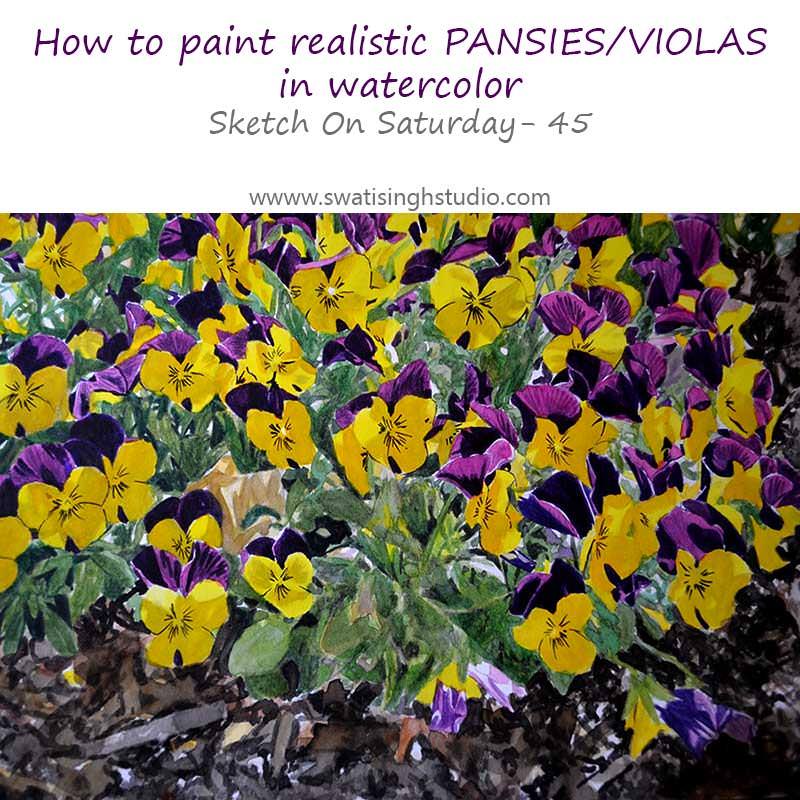
Hello, lovely people! I am here with yet another painting in the spring series. Today I am showing you how to paint some realistic pansies or violas in watercolors.
Pansies are among the most popular garden flowers today. Plant seeds in late winter for early spring and summer flowering, or plant seeds in the summer for winter flowering.
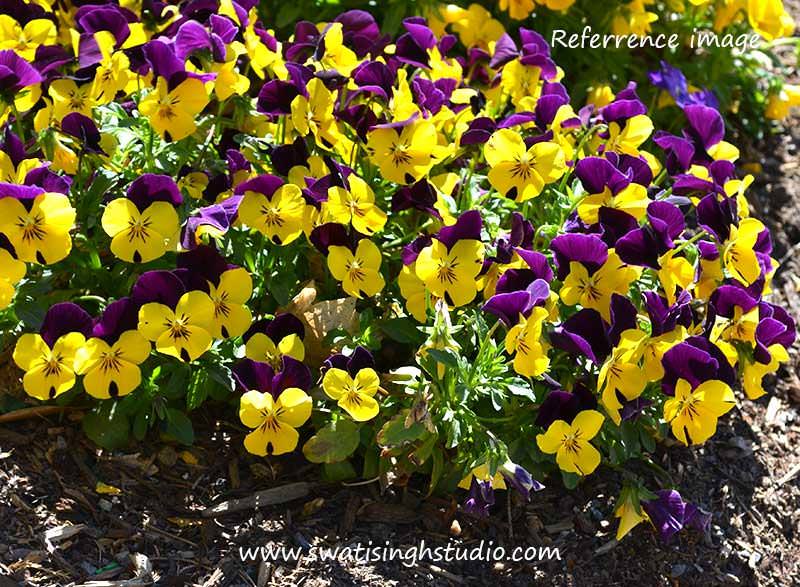
Below is a photograph I took a few days back. I love the contrast of purple and yellow colors in this composition.
The watercolors I used in this tutorial are
1. Lemon yellow
2. Yellow ochre
3. Cadmium yellow
4. Indigo blue
5. Olive green (may even use sap green instead)
6. Thalo green
7. Burnt umber
8. Burnt sienna
9. Purple
10. Permanent rose
Brushes I used- Round no.1 and no. 5
To know about some other materials that you might require you may refer to THIS post.
So let’s begin painting now.
I have divided the painting into 5 parts.
1. The lightest- YELLOW PETALS
2. The GREEN leaves
3. PURPLE petals
4. LAYER..LAYER..LAYER
5. Painting the FINE DETAILS.
Painting this composition might look a bit daunting at first but I promise if you follow me along you will be able to paint them with a much greater ease.
Consider all the tiny petals and leaves as part of a puzzle.
I did a detailed drawing of the composition with an HB pencil.
Now all we need to do is start filling in the pieces of the puzzle with watercolors. Whenever I paint such complicated compositions, it reminds me of my coloring books back in school days. Filling in those outlines with crayons was so relaxing!
So let’s begin.
PART 1- YELLOW PETALS
Important tips: Before we begin applying the yellow colors, here are a few things to keep in mind.
1. Keep a clean sheet of white paper under your hands while you paint.
Since the area we are working on is large, our hands will move over the sheet a lot. The white sheet will help protect the delicate outlines from rubbing off and will also protect the sheet from any oil marks from our hands.
2. Keep an eraser near you throughout this step.
Lemon yellow is a very transparent watercolor. You can easily see any pencil lines from underneath it. Even if you saturate the color with several layers! As you move along painting the petals one by one keep erasing any lines that you feel might show from underneath. Apply the color only after you have erased the lines properly.
Step 1. Apply a thin glaze of lemon yellow to all the yellow petals.
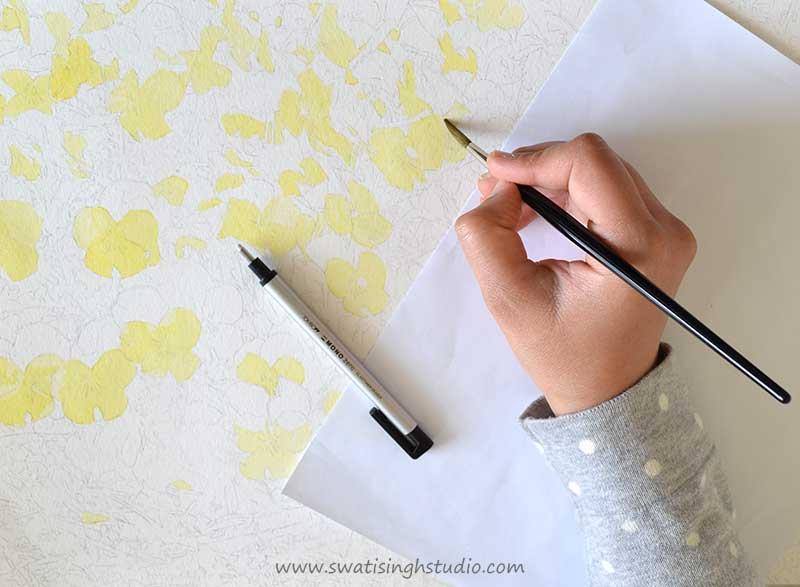
Step 2. Apply a thin layer of yellow ochre and cadmium yellow to the shadow areas of the petals as shown below.
I did this in no. 5 brush but you may use a thinner brush such as no. 3 for a better control.
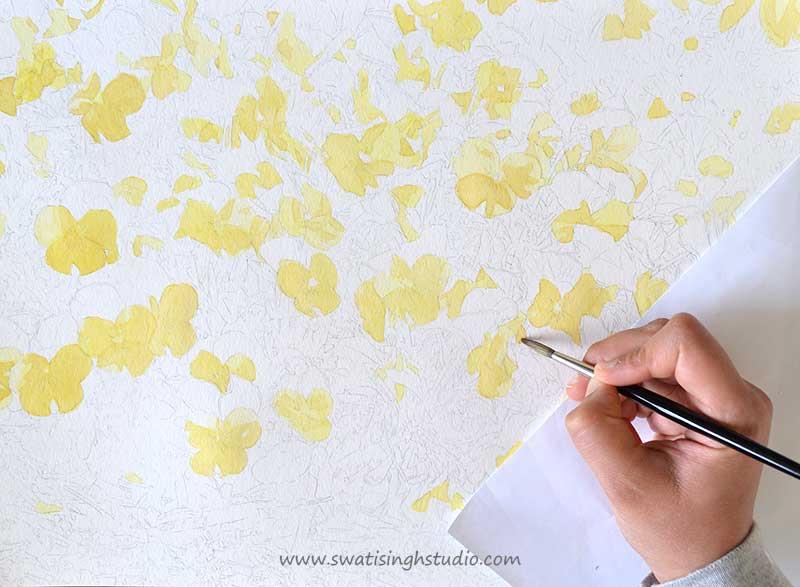
Step 3. Add another layer of lemon yellow all over the petals including the shadow areas. This will tie everything together.
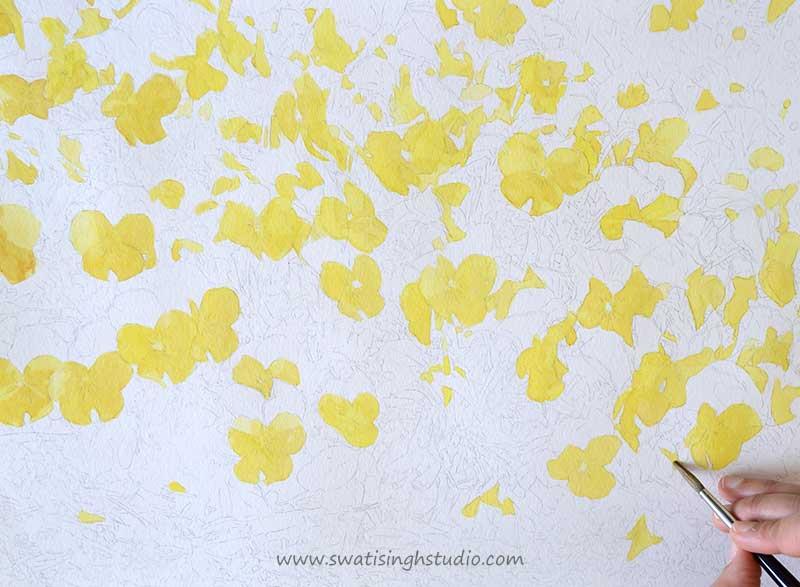
Step 4. Repeat another layer of Step 2 to make the shadows more prominent.
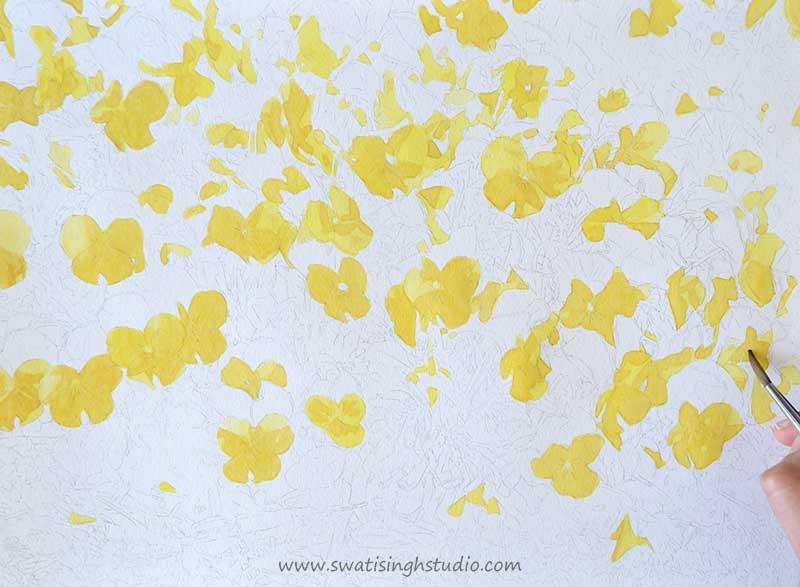
Leave the petals here for now. Complete the rest of the steps in the painting first and we will come back to these again in the end.
PART 2- GREEN LEAVES
Step 1. Prepare a mix of indigo blue and olive green with a slight touch of thalo green.
Apply this color to the leaves with your no. 1 brush.
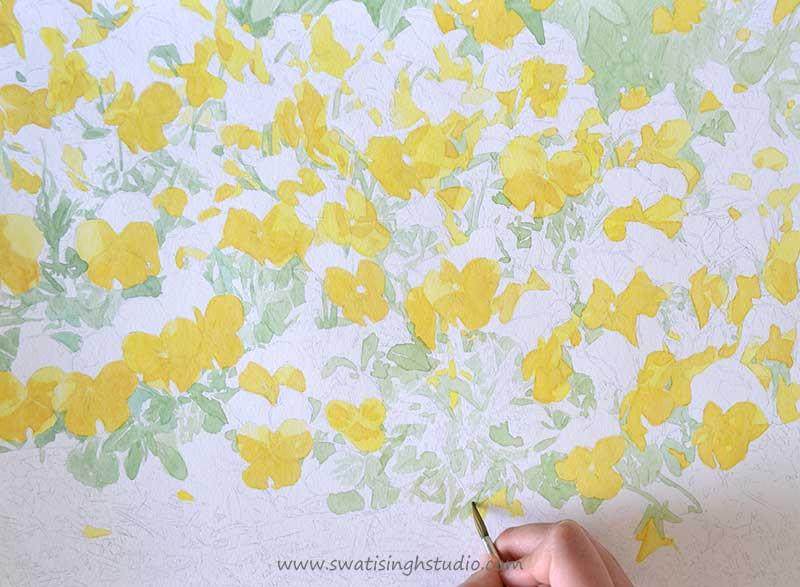
Important: Go around the highlights carefully. Protect the white of the paper.
This step might take a bit long to paint. Just stay there and relax filling in the details in green.
Step 2. Add a touch of burnt umber and burnt sienna at the tips of some of the leaves as shown below.
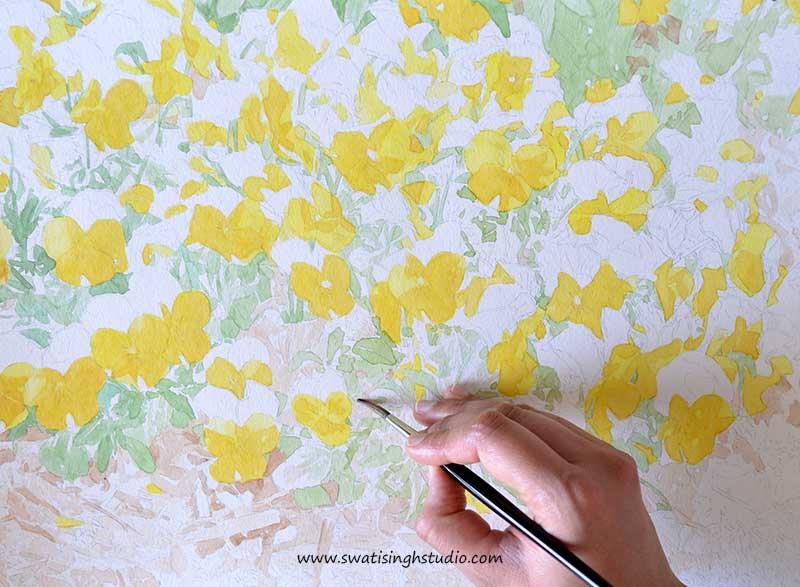
Step 3. Prepare a slightly darker mix of green by increasing the amount of indigo blue in step 1.
Apply this color to the shadow areas of the leaves.
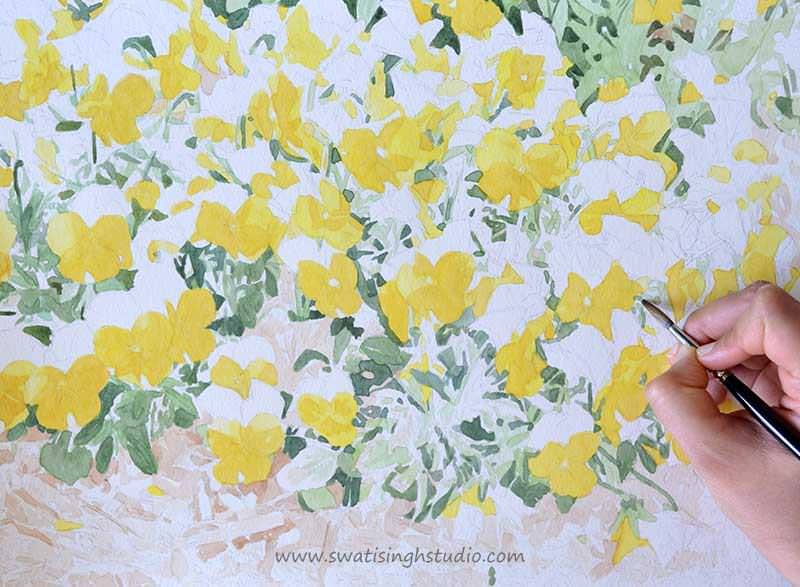
Step 4. Once the dark shadows have dried completely, give a glaze of olive green to the entire leaves. This will help tie the shadows and the body color together.
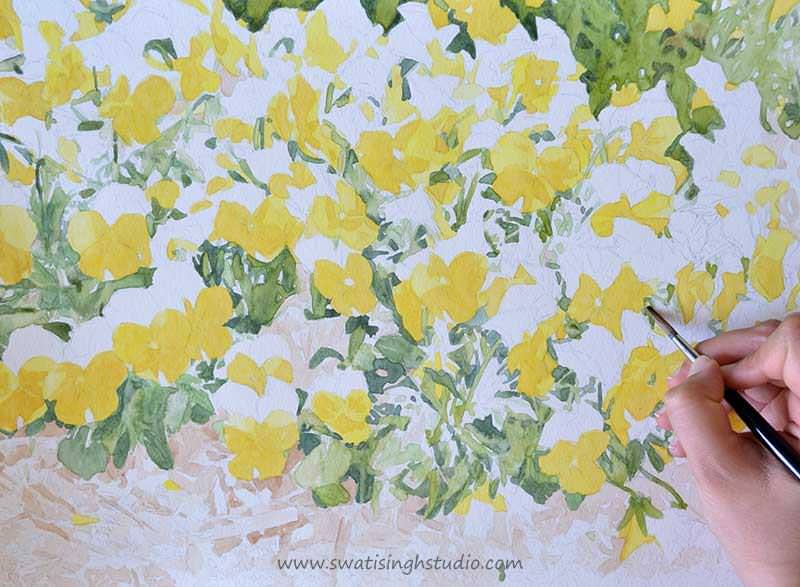
We will leave the leaves here for now. Painting those tiny leaves for long may give you an eye sore. After all, it requires a great deal of concentration to paint such fine details. Hence, give your eyes some rest by moving to the next step.
PART 3- PURPLE PETALS
Yes, I know you were waiting for the purple to come! I was too.
The PREPARATION- Lay out the following colors next to each other on your pallet.
Purple
Indigo blue
Permanent rose
We are going to prepare different mixes of purple as we paint the petals. If we closely observe the petals we will see that all the purple petals are not the same. Some are more violet (in the shadow areas) and some are more pinkish (where the sunlight falls). Understanding the parts of the petals before proceeding to paint will help you tremendously.
Practice some mixes of these three colors on a separate watercolor sheet before applying to the drawing. This will give you a better hold of the colors.
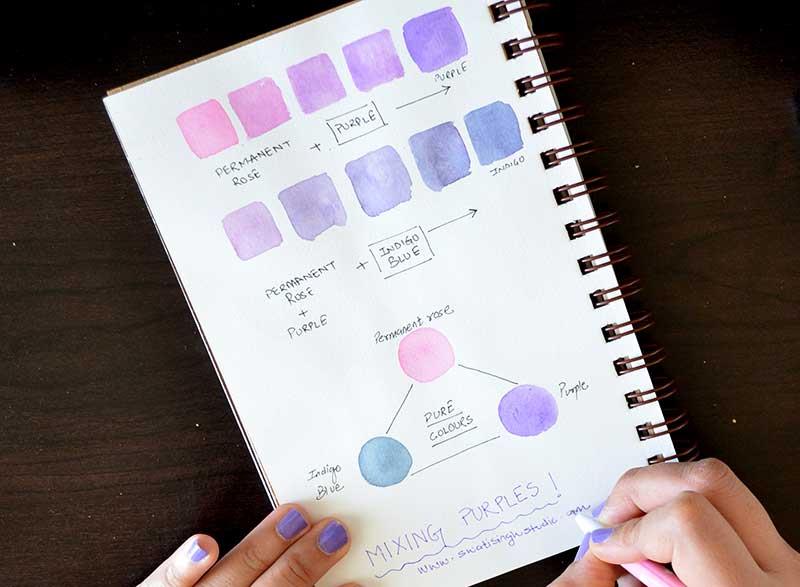
Step 1. Mix some purple and permanent rose together. Start by applying a very dilute glaze of this purple all over the petals as shown below.
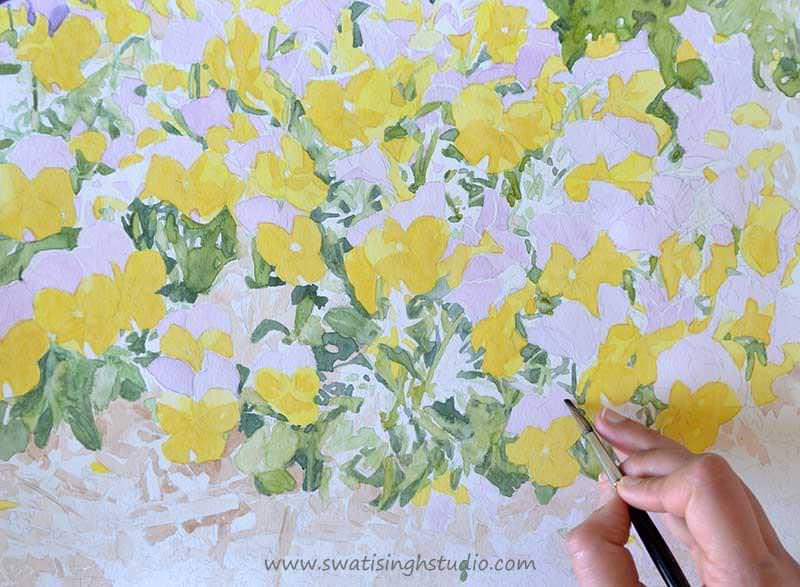
Step 2. Prepare a slightly darker mix of the above three colors by increasing the amount of indigo blue. Apply this color to the shadow areas and paint the fine veins of the petals using a no.1 brush.
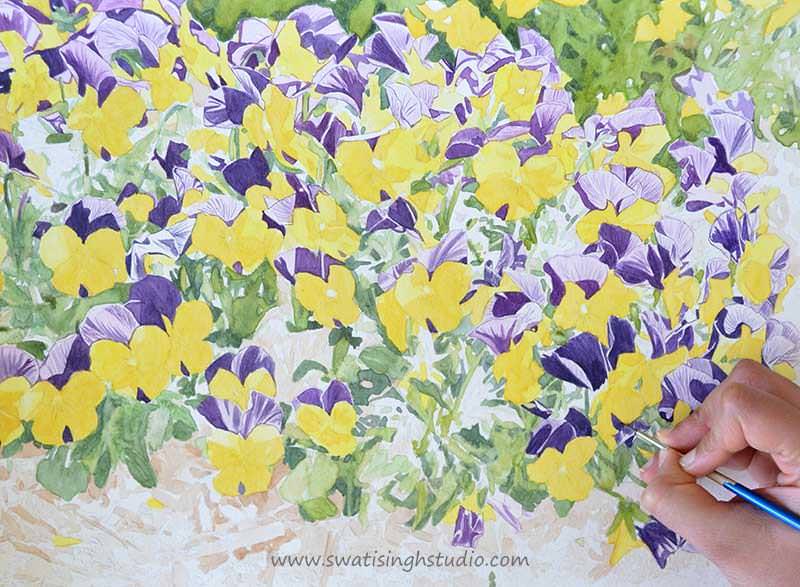
Step 3. For the sunlit areas of the petals prepare the mix by adding more of permanent rose. This will make the purple look more pinkish in color. Apply a thin glaze of this pinkish purple as shown below.
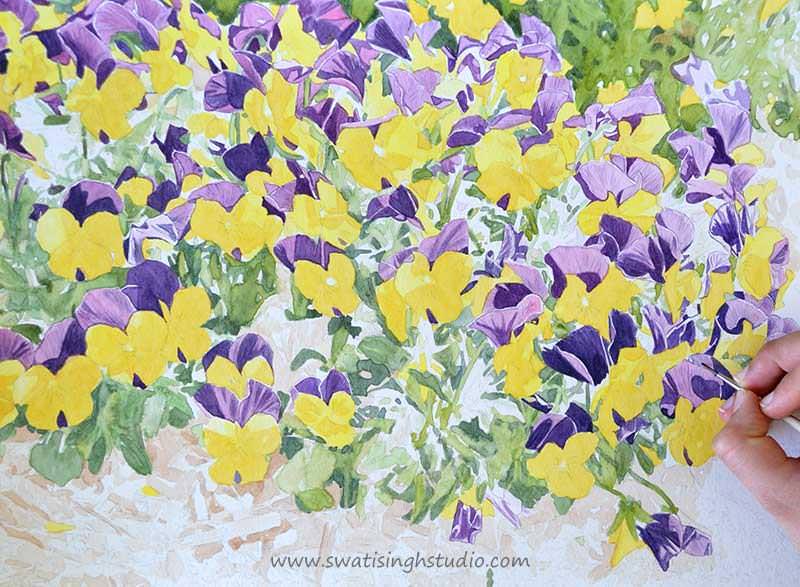
PART 4- LAYER…LAYER…LAYER
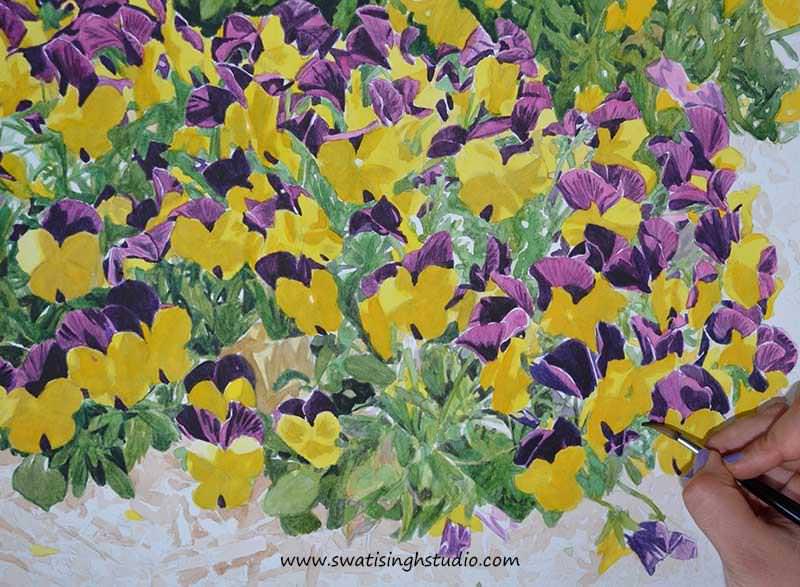
Step 1. When the composition is so complicated, you may find that you forgot to paint a few areas here and there. Simply add colors to those.
Step 2. Following all the above steps add a few more layers to intensify the colors. Below you can see the after look.
PART 5- THE DETAILS
Now simply add the fine details you see on the yellow petals in a darker shade of purple (more indigo blue). Use a no. 1 brush.
I also toned down some of the highlights on the leaves with a very light glaze of olive green.
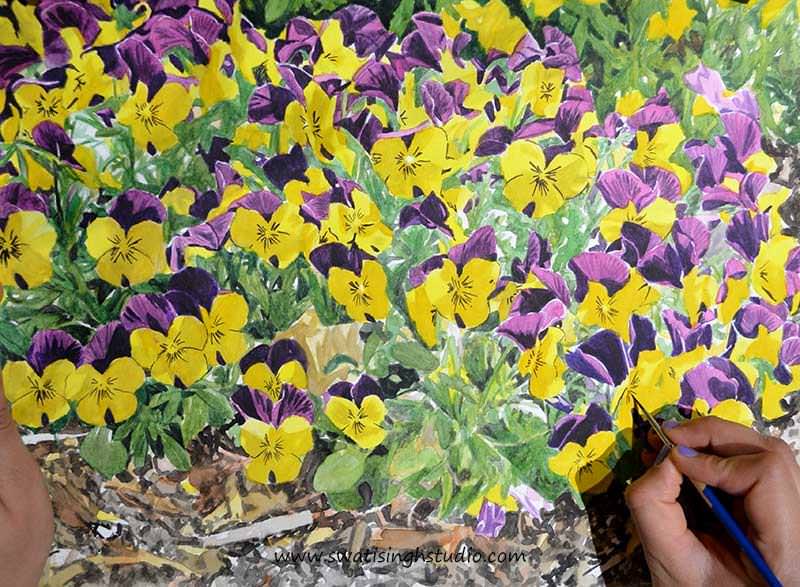
So here you are with your beautiful pansies. Painting these surely took a lot of time but I hope it was enjoyable to paint at the same time. After all, it is more about relaxing and enjoying the process than it is about finishing it.
I hope you liked the tutorial. Do not forget to SUBSCRIBE to my blog to see more of such watercolor tutorials! You may also follow me on my FACEBOOK PAGE!
Happy painting!
Swati